
Documented results from a mobile surveillance deployment
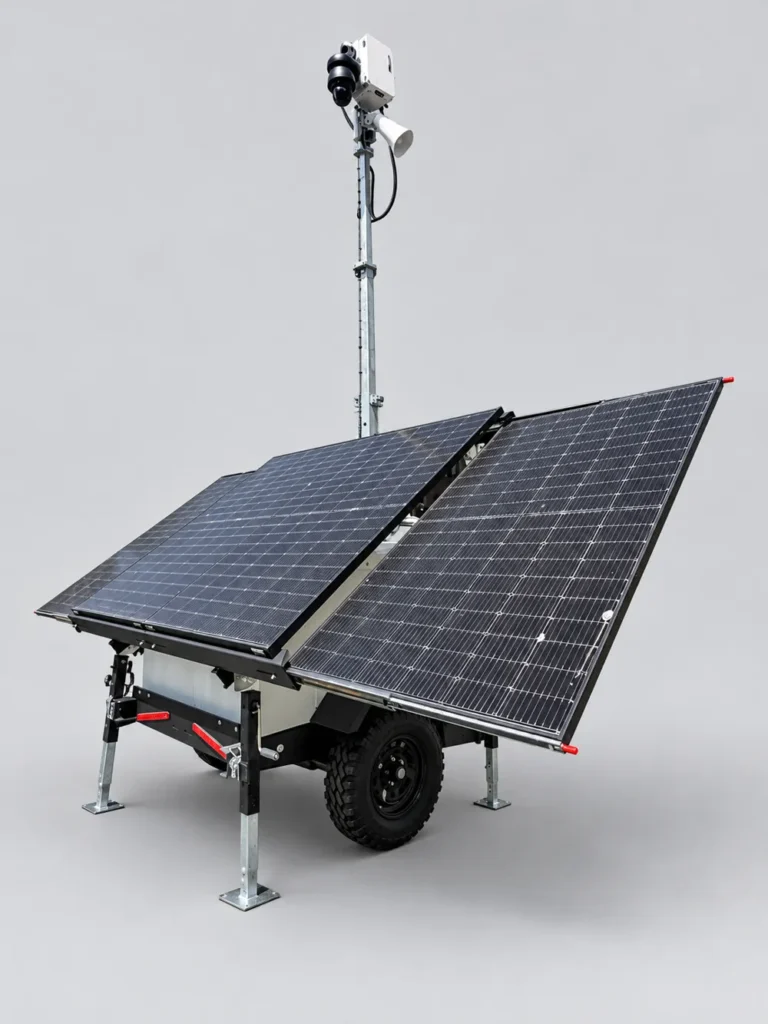
An occupied residential property in New York needed flexible security while rehabilitation work went on around its residents. Surveillance Towers LLC deployed three solar-powered mobile surveillance towers. We then compared official police call records from equal periods before and during the deployment.
At a glance
| Property | Occupied residential building, New York |
| Project | Residential rehabilitation and onsite improvements, including parcel-locker construction |
| Equipment | 3 solar-powered mobile surveillance towers at the start, fewer as needs changed |
| Site power or internet needed | None |
| Comparison | Two matched 244-day periods of police call records |
The challenge
Rehabilitation work changed the property’s security needs from week to week. Management was concerned about groups gathering outside the building and wanted surveillance that could stay in place while the work went on.
The deployment
We started with three mobile, solar-powered towers. As the site’s needs changed, we reduced the number of towers instead of leaving equipment where it was no longer needed. Coverage stayed in place during the parcel-locker construction.
Each tower gave management:
- live and recorded video they could view remotely
- AI-assisted detection with alerts
- audible and visual deterrence
- solar power and its own connection, with no wiring to the building
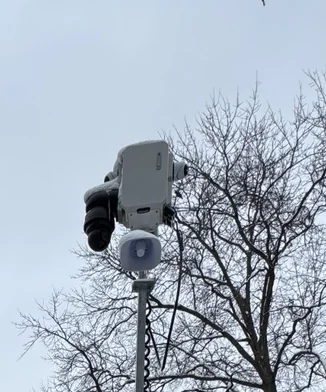
Actual project photo. The property has been cropped out.
What the records show
We compared recorded police calls for service from the 244 days before the towers arrived with the first 244 days they were on site.
| Call type | Before | During | Change |
|---|---|---|---|
| Disorderly conduct | 73 | 46 | 37% fewer |
| Assault-classified calls | 8 | 2 | 75% fewer |
| Security-related calls* | 367 | 342 | 6.8% fewer |
| All recorded calls | 767 | 771 | 0.5% more |
*Security-related calls combine the alleged-offense, public-order and investigation or security-response categories. Medical, fire, traffic, administrative and proactive-policing calls are not included in this group.
The full picture
Overall calls rose slightly, from 767 to 771, and some categories went up. The decreases above are recorded call classifications, not confirmed crimes. They don’t prove the towers caused the change.
We publish the whole picture because property managers deserve accurate numbers when they make security decisions.
How we compared the records
We counted unique police-blotter incident numbers from public records for two matched 244-day periods, and checked for repeated incident numbers. Two different numbers can still relate to the same event.
This is an observational comparison without a control group. Occupancy, the rehabilitation work, policing practices, how often people report incidents, and other security measures can all affect the counts. The records also don’t show whether an incident was prevented or where on the property it happened.
To protect the client’s privacy, we’ve withheld the client’s name, the property, exact dates and location details, and we don’t reproduce the source records.
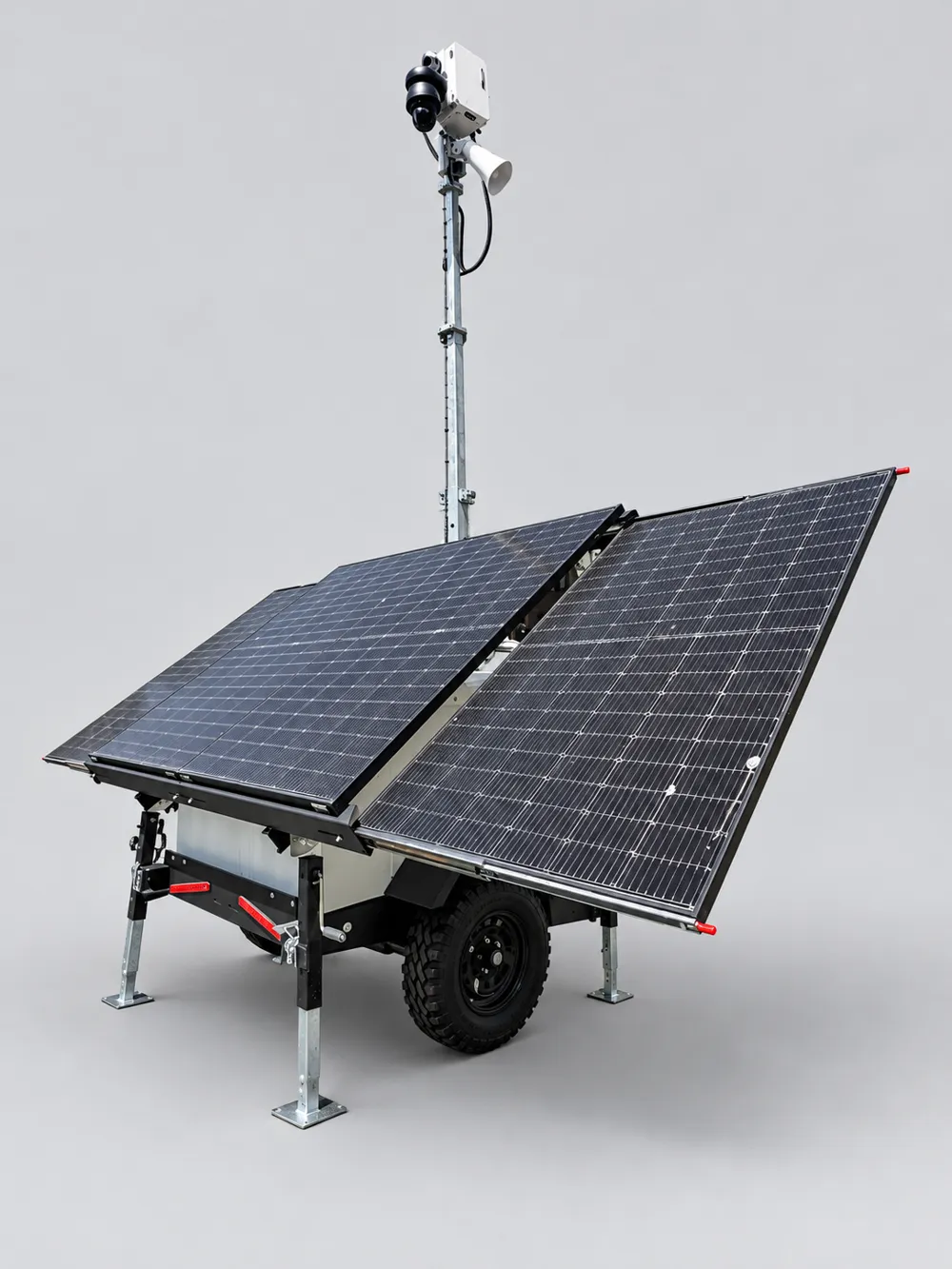
Project photo. The background was removed for privacy.
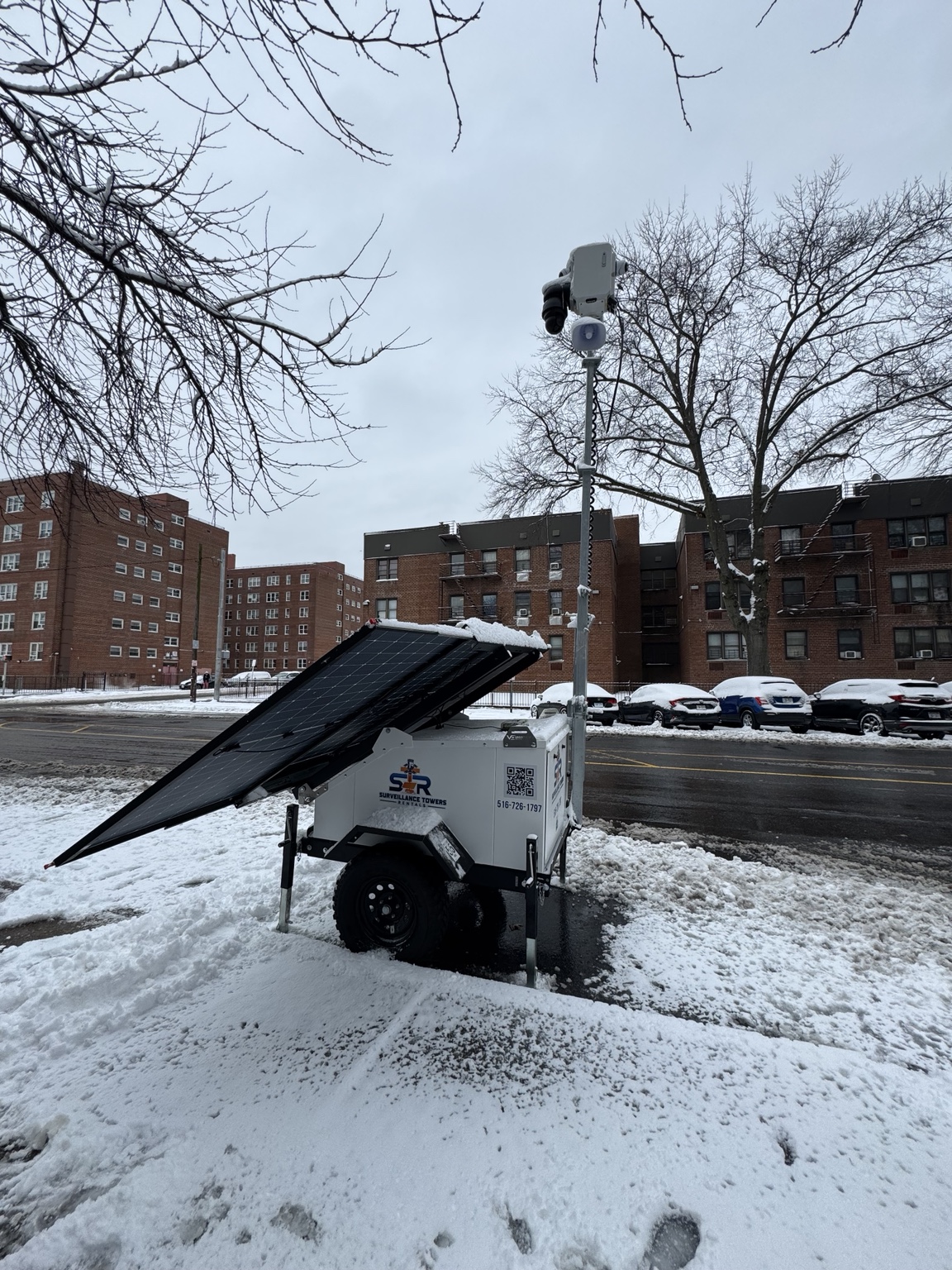
The tower on the street in winter. Extra project photo.
Why it worked for this property
- It moved with the project. Towers could be repositioned or removed as work areas changed.
- No construction needed. Solar power and wireless connection meant no trenching, wiring or building access.
- Management could see the site. Live and recorded video was available from anywhere, with alerts when the system detected activity.
- People could see the towers. Lights and speakers made it clear the property was being watched.
Planning a rehabilitation or managing a property?
We’ll help you work out how many towers you need, where they should go, and how long to keep them. See our property management surveillance services, or call (516) 726-1797, 7 am to 7 pm, 7 days a week.
After the Rental: Permanent Security for the Property
This deployment was temporary by design — the rented towers covered the rehabilitation period and were removed when the project wrapped. For properties that need permanent protection instead, our sister company Tulvel installs fixed low voltage security systems: CCTV, access control and structured cabling.
Tulvel is based in Brooklyn, NY and serves the Tri-State area. To plan a permanent installation, visit Tulvel.